The technology behind the lightest horse carriage on the market
Six engineering decisions, made one by one over years of experimentation, are what allow the Navarro to weigh 65 kg without giving up either safety or ride comfort.
Chassis
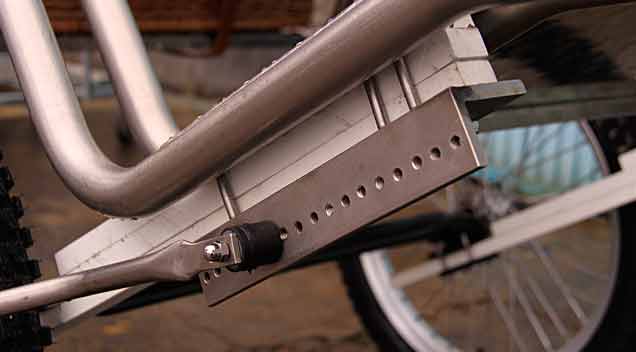
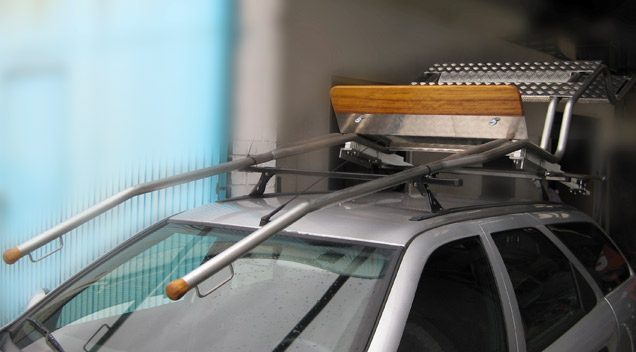
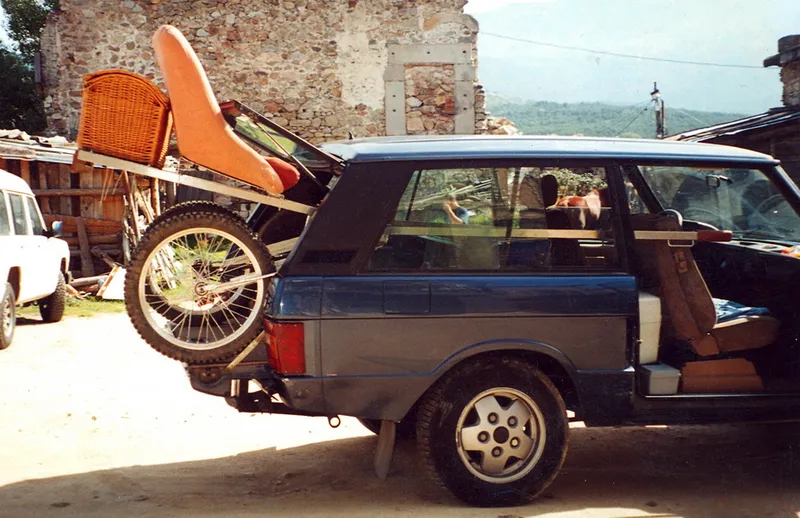
The frame is made of two one-piece stainless steel side rails, joined together by laminated aluminium plates and assembled with stainless steel Allen bolts, all the same size across the whole carriage. This allows it to be fully assembled and disassembled with a single tool, in a few minutes, for transport in a van or horse trailer.
The nuts are self-locking, which stops the fasteners loosening under the vibration typical of the uneven terrain on mountain trails.
Leaf spring mount on the stainless steel frame
Kevlar: why the suspension isn't steel
The Navarro's leaf springs are made of Kevlar fibres embedded in a polyester matrix, a composite material chosen for its strength-to-weight ratio.
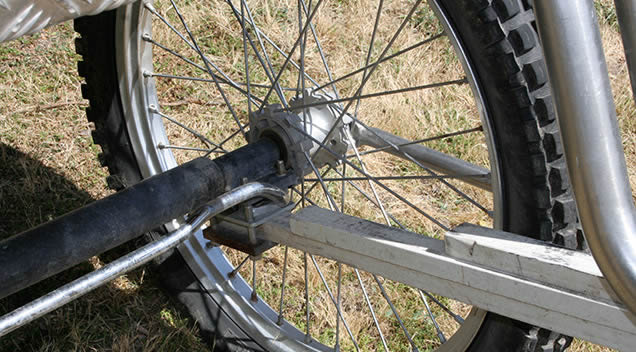
This material exceeds steel in yield strength, at five times lower density. In practice: the same ability to absorb the weight of passengers and bumps in the road, at a fraction of the weight an equivalent steel leaf spring would need.
The Kevlar leaf spring works directly on the rear axle, with no intermediate components
Suspension adjustable per passenger
Each seat has its own suspension adjustment, independent of the rest. This allows comfort to be tuned to each occupant's weight, instead of applying a single average setting for all passengers, as happens in traditional carriages.
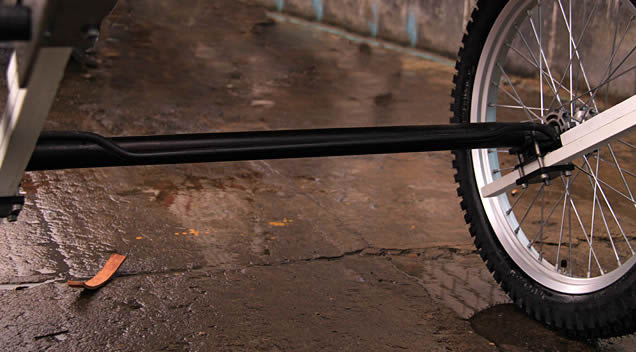
The axle is a chrome-molybdenum steel tube, a material common in structures that require maximum strength with minimum weight, such as racing chassis.
Chrome-molybdenum steel tube axle
Trial wheels: why they aren't carriage wheels
The Navarro's wheels come from World Championship trial motorcycles. They're designed to absorb strong impacts and deform without failing, a property that on mountain terrain — loose stone, roots, uneven ground — proves decisive compared to a wooden wheel or one with rigid metal spokes.
A tube protects each wheel from knocks against logs or rocks and stops it jamming, while also keeping branches from getting between the wheel and the leaf spring.
Centre of gravity: the key to horse welfare
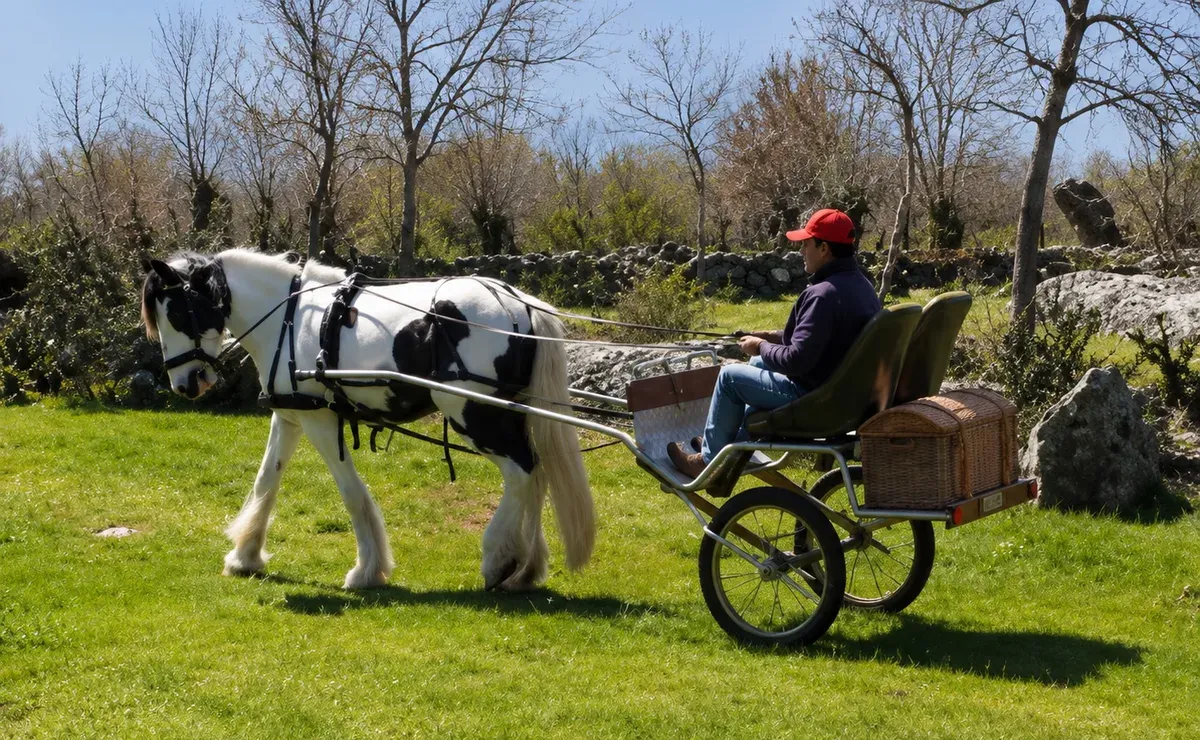
The Navarro's centre of gravity sits directly above the axle. This gives it neutral behaviour at the shafts: the carriage places no extra weight on the horse, whether standing still or moving, even when the number of passengers changes.
The neutral behaviour at the shafts shows in every step, not just at a standstill
Lightness: the sum of everything above
None of the previous decisions exists in isolation: the chassis, the Kevlar, the trial wheels and the centre of gravity were designed together to reach a single result, 65 kg unladen, against the usual 220–400 kg of a conventional single-axle carriage.
That weight difference is what allows a medium-sized horse to complete mountain crossings, sand routes or long-distance trail riding without the overload typical of traditional carriages.
Disassembled, on the roof of a carDisassembled, in the boot of an estate car