Horse welfare
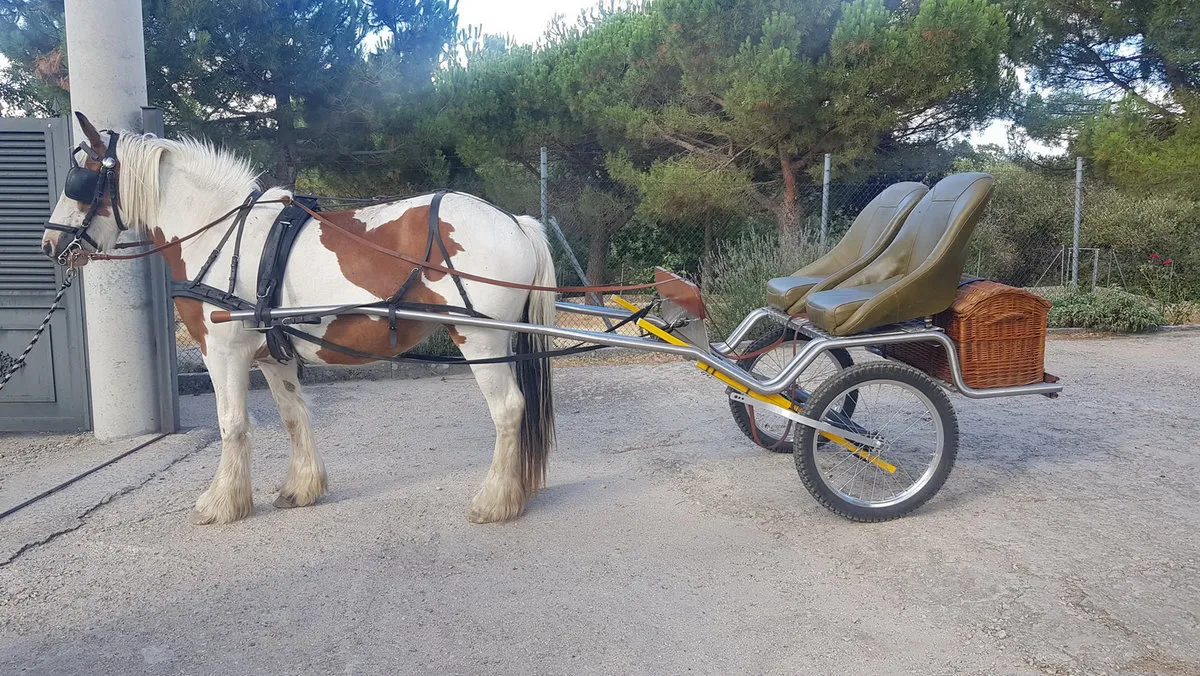
Before a single bolt of the Navarro was designed, there was a question: how much load can a medium-sized horse pull on a mountain crossing without the effort showing by the end of the day? The entire design was born from answering that question, not the other way round.
When a horse pulls a carriage, part of its effort goes into moving the carriage's own structure, before it even moves the passengers. A 300 kg carriage demands far more baseline work than a 65 kg one, even before anyone climbs aboard. Cutting the structural mass by a quarter isn't a design whim: it's the variable that determines how much distance, over how much elevation gain, that horse can cover without accumulated fatigue.
The European Union's Animal Welfare Platform, in its good practice guide for the use of horses, devotes a specific section to draught horses. On the weight a horse can pull, the guide highlights two factors: that the limit depends on the terrain and the horse's condition, and that the cart must be well balanced so as not to add unnecessary effort to the animal.
These are exactly the two principles the Navarro was designed around: reduced weight to widen the accessible terrain, and a centre of gravity directly above the axle so the carriage behaves neutrally at the shafts at all times, loaded or empty.
Read the full guide (EU Animal Welfare Platform, distributed by AVEE)
When a carriage's centre of gravity isn't aligned with the axle, part of the weight is transmitted downward or upward through the shafts, directly onto the horse's back. This happens even with carriages that aren't especially heavy, and it's felt more the longer the day goes on.
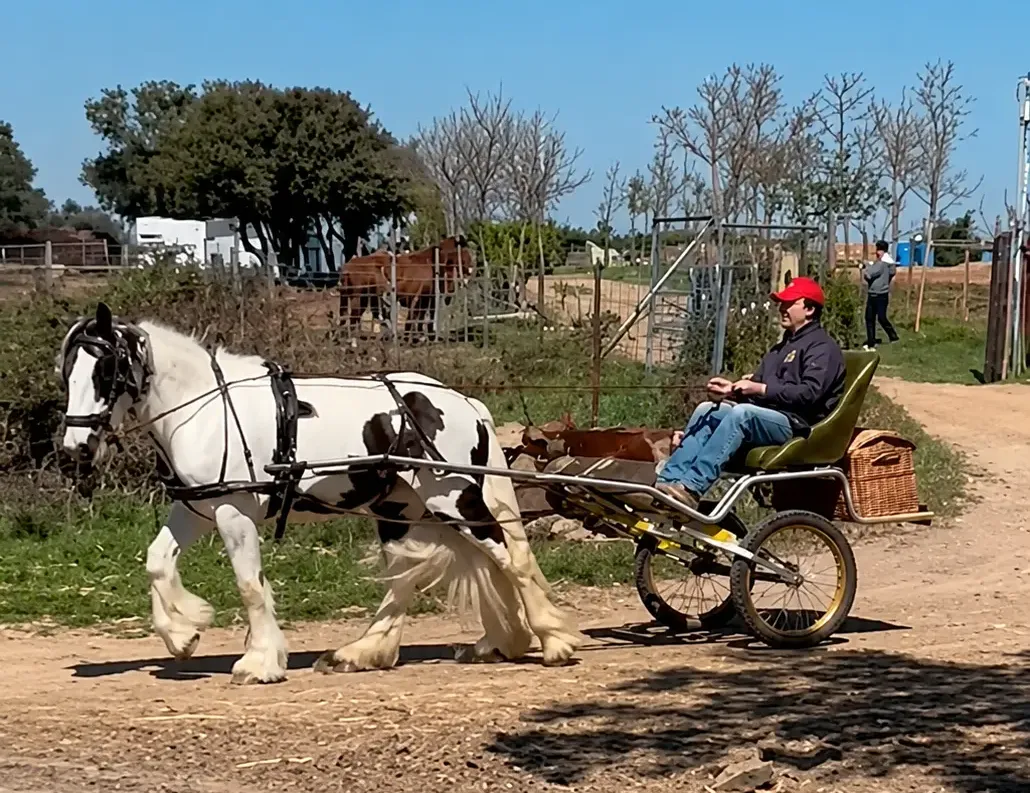
The Navarro places its centre of gravity directly above the axle, so that the carriage's weight stays with the carriage and isn't transferred to the horse, whether standing still or moving, with one passenger or two.
The same European guide recognises that context matters: a draught horse working long days for others is not in the same situation as a horse pulling, on an occasional crossing, its own knowledgeable owner.
The Navarro was designed for the second case. It isn't a carriage built for tourist rounds or for intensive use on behalf of third parties: it's a personal adventure carriage, designed so that a horse's owner — who knows its condition, character and limits — can take it to terrain that was previously out of reach, with the same standard of care they'd apply to any other activity with their horse.
Want to see this design put to the test on real terrain? Read the crossings made with the Navarro. If you already know what your horse needs, request your quote.